
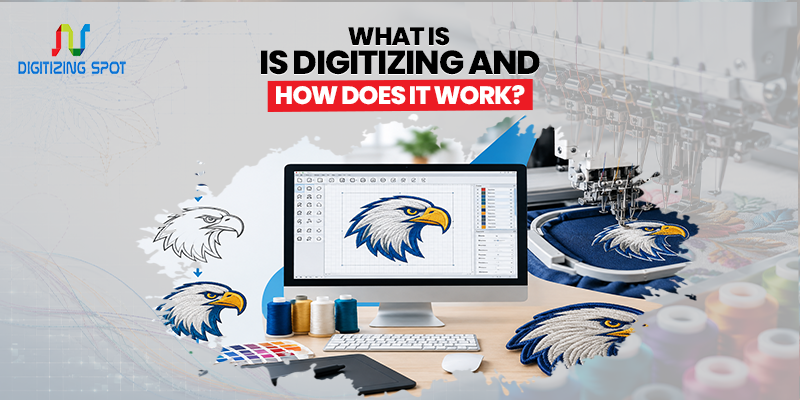
What Is Digitizing and How Does It Work?
Have you ever wondered how a logo turns into a clean embroidery design on a shirt, hat, or jacket? The answer is embroidery digitizing.
Digitizing converts artwork into a file that an embroidery machine can read. It tells the machine where to stitch, which stitch type to use, and how the design should be built. A good digitized file can make a big difference. It can help your logo look clean, sharp, and professional on the finished product.
What Is Embroidery Digitizing?
Embroidery digitizing is the process of converting an image, logo, or artwork into an embroidery machine file. A regular image file, such as JPG or PNG, cannot directly tell an embroidery machine what to do. The machine needs special instructions. If you want clean, embroidery-ready artwork, consider our custom digitizing service.
A digitizer creates these instructions using embroidery software. The software helps set stitch types, stitch direction, density, underlay, thread colors, and other settings. The final file acts like a map for the embroidery machine. It guides the needle through the fabric to create the design.
How Does Digitizing Work?
The digitizing process starts with the artwork. This can be a company logo, name, badge, graphic, or other design. The digitizer first studies the artwork. They look at its size, shapes, colors, text, and small details. The artwork is then prepared for embroidery. Some details may need to be changed because embroidery does not work exactly like printing.
For example, very small text may not stitch clearly. Thin lines can also become hard to see. A skilled digitizer knows how to adjust these details while keeping the main look of the design. The next step is choosing the right stitch types.
Order Your Custom Patch Now!
Common Embroidery Stitch Types
Different parts of a design need different stitches. Choosing the right stitch can affect how the final embroidery looks and feels.
- Satin stitches are often used for borders, letters, and narrow shapes. They can create a smooth and clean finish.
- Fill stitches are used to cover larger areas. They can give logos and artwork a solid embroidered look.
- Running stitches are useful for thin lines and small details. They use a simple path that allows the needle to create fine outlines.
The digitizer decides where each stitch should go. Stitch direction is also planned to help create a clean result.
Why Stitch Direction Matters
Stitch direction may seem like a small detail, but it can affect the entire design. Different parts of an embroidered logo can use different stitch directions. This can help create texture and make the design easier to read. If you want sharp, scalable artwork for printing, consider our vector conversion service.
Good stitch direction can also help reduce problems such as uneven coverage and puckering. The digitizer needs to think about how each section will connect with the next one. This is one reason professional digitizing requires skill and experience.
What Is Underlay in Embroidery?
Underlay is a layer of stitches placed underneath the main stitches. It helps support the top layer of embroidery and can improve coverage. It can also help keep the fabric and stitches more stable during production. The type of underlay depends on the fabric, design, and stitch type. For example, a design made for a cap may need different settings than one made for a jacket.
Why Design Size Matters
The same artwork may not work perfectly at every size. A logo that looks great at 4 inches may lose important details when reduced to 2 inches. Small letters, thin lines, and tiny shapes can become difficult to stitch. A professional digitizer can adjust the design for its intended size.
This is why it is important to tell your digitizer where you plan to use the embroidery. A hat, polo shirt, jacket, bag, and patch may all require different settings. If you want vibrant designs for custom apparel, consider our DTF transfers service.
What File Does an Embroidery Machine Need?
Embroidery machines use specific file formats. The required format depends on the machine you use. Common embroidery formats include DST, PES, EXP, JEF, and VP3.
For example, DST is widely used with many commercial embroidery machines. Other machines may require a different format. Before ordering digitizing, check which file format your embroidery machine needs. Providing this information can help avoid delays.
Why Good Digitizing Matters
A poor-quality digitized file can create problems during embroidery. You may see loose threads, gaps, too many stitches, poor lettering, or uneven coverage. The design may also look different from the original artwork.
Good digitizing helps reduce these problems. A properly prepared file can also help the embroidery machine run more smoothly. This can save time when producing multiple shirts, hats, jackets, uniforms, or patches. For businesses, this matters even more. Your embroidered logo represents your brand.
Digitizing for Different Products
Embroidery digitizing is used for many products. Businesses often use digitized logos on uniforms, polo shirts, hats, jackets, and workwear. Sports teams may use digitizing for team names, numbers, and logos. Clubs and organizations may use it for badges and apparel.
You can also use digitized artwork for embroidered patches, bags, caps, and promotional products. Each product can have different embroidery needs. A design made for a flat shirt may need changes before it is used on a curved cap.
Why Professional Digitizing Is Worth It
It may seem easy to convert an image into an embroidery file. But simply converting an image does not create a production-ready design. Professional digitizing involves planning every part of the stitch process.
A skilled digitizer considers stitch density, direction, underlay, pull compensation, sequencing, and fabric type. These details can have a direct effect on the final embroidery. For businesses ordering large quantities, getting the file right before production can help prevent costly mistakes.
Need Help To Create Custom Patch Right Now!
How to Choose an Embroidery Digitizing Service
Start by checking the quality of previous work. Look for clear lettering, clean edges, good stitch coverage, and smooth shapes. Turnaround time also matters, especially if you have an upcoming production deadline.
Customer support is another important factor. You should be able to explain your design needs and ask questions before production. Pricing matters too, but the cheapest option is not always the best choice.
A low-cost file that needs major corrections can cost more in the long run. Look for a service that offers quality work, fast turnaround, and clear communication.
Conclusion
Embroidery digitizing is more than converting an image into a machine file. It is the process of planning how that artwork will be stitched onto fabric. The right stitch types, direction, density, underlay, and sequencing can all affect the final result.
Whether you are creating branded uniforms, custom hats, jackets, or patches, a well-digitized file is an important part of quality embroidery. If you want clean results without wasting time on trial and error, professional digitizing can make the process much easier.
Get A Custom Quote
Frequently Asked Questions
It converts artwork into a file an embroidery machine can read.
A digitizer converts artwork into stitch instructions for the machine.
Common formats include DST, PES, EXP, JEF, and VP3.
It depends on the design size and level of detail.
Pricing depends on the design and stitch count.
Yes, but some details may need to be adjusted for embroidery.
DST is a common file format used by embroidery machines.
It helps create clean and consistent embroidery results.
Yes, logos can be digitized for hats, shirts, jackets, and more.
Digitizing Spot offers quality digitizing, fast turnaround, and free quotes.
