
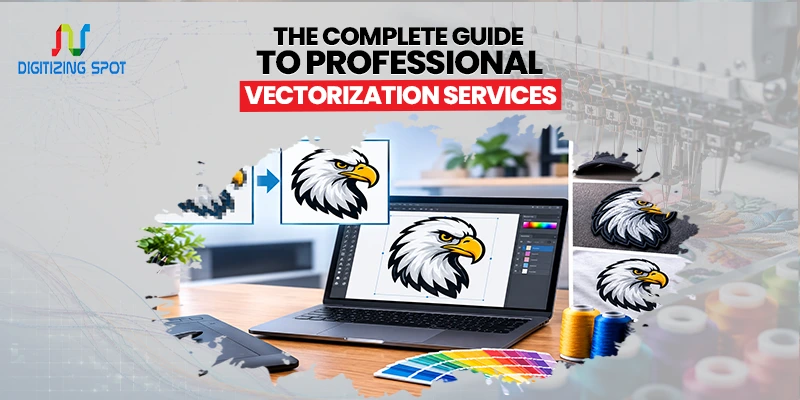
The Complete Guide to Professional Vectorization Services
A blurry logo can make your business look less professional. It can also create problems when you need to print it on a banner, shirt, sign, or product. This is where vectorization helps. Professional vectorization turns a pixel-based image into clean, scalable artwork.
With the right vector file, your design can stay sharp at almost any size. But what does the process involve, and when should you use a professional service? Here is everything you need to know.
What Is Vectorization?
Vectorization is the process of converting a raster image into vector artwork. Raster files such as JPG and PNG are made from pixels. When you enlarge them too much, the image can become blurry or pixelated.
Vector files use paths, points, lines, and shapes instead. This allows the artwork to be resized without losing its quality. Common vector formats include AI, EPS, SVG, and PDF. If you want your artwork turned into a clean embroidery-ready file, consider our custom digitizing service.
Why Do You Need Vector Artwork?
A business logo may be used in many places. You might need it for a website, business card, uniform, banner, packaging, or large sign. One small image may not work well for all these uses.
A vector file gives you more flexibility. You can make the design smaller or larger while keeping the edges clean. It also gives printers and production teams a better file to work with.
Order Your Custom Patch Now!
Raster vs. Vector Files
Raster and vector files work in different ways. Raster images use pixels and are ideal for photographs and highly detailed images. JPG and PNG are common raster formats.
Vector artwork uses mathematical paths to create shapes and lines. It is commonly used for logos, icons, lettering, and illustrations. For example, a small JPG logo may look fine on a website but become blurry on a large sign.
A vector version can be resized without the same quality loss. If you want a blurry or low-quality image converted into clean, scalable artwork, consider our vector conversion service.
What Does Professional Vectorization Include?
Professional vectorization is not simply changing a JPG into another file type. The artwork must be recreated using vector paths. The designer traces and rebuilds the important parts of the image.
This can include shapes, lettering, curves, lines, and colors. The designer may also remove unnecessary points and fix uneven edges. The finished artwork should closely match the original design while being ready for your intended use.
When Do You Need Vectorization?
You may need vectorization if your logo is only available as a JPG or PNG. It is also useful when your current image becomes blurry after resizing. Businesses often need vector files for:
- Business cards
- Banners and signs
- Clothing and uniforms
- Product packaging
- Labels and stickers
- Promotional products
- Custom patches
- Embroidery projects
If a printer asks for an AI, EPS, or SVG file and you only have a low-resolution image, vectorization can solve the problem.
How Does Vectorization Work?
The process starts with your original artwork. You provide the image along with any instructions about colors, size, or intended use. The designer reviews the artwork and identifies its main shapes, text, colors, and details. The design is then recreated using vector paths. Curves and lines are adjusted to keep the artwork clean.
Colors are matched as closely as possible to the original. Before delivery, the file is checked for common issues such as rough edges, incorrect shapes, or missing details. The final file is then saved in the format you need.
What Images Can Be Vectorized?
Most common raster artwork can be used for vectorization. This includes logos, sketches, scanned artwork, screenshots, JPG files, and PNG files.
A clear original image can make the process easier. However, a professional designer can often recreate artwork even when the source image is small or blurry.
Very detailed artwork may require more work than a simple logo. If you have a clearer version of the design, send it along with the original file.
Vectorization for Printing
Professional vector files are widely used for print projects. Your design may need to appear on a business card one day and a large banner the next. Using the right artwork file helps keep lines, shapes, and text clear at different sizes. This is especially important for logos.
Small flaws that are not obvious on a computer screen can become noticeable in large prints. A clean vector file gives your printer artwork that is easier to prepare for production.
Vectorization for Embroidery and Patches
Vector artwork is also useful for embroidery and patch projects. However, vectorization and embroidery digitizing are different services.
Vectorization creates scalable artwork. Digitizing converts artwork into a stitch file that an embroidery machine can read.
For custom embroidered patches, hats, jackets, or uniforms, you may need both. Starting with clean artwork can make the production process easier.
How to Choose a Vectorization Service
The quality of your vector file depends on the person creating it. Look for a service with experience in logos, business artwork, printing, and apparel. Check their previous work before placing an order. Samples can give you a better idea of their attention to detail.
Ask which file formats they provide. Make sure they can deliver the format required by your printer or production company. Turnaround time is also important if you have a deadline. A reliable provider should offer clear communication, quality work, and a reasonable turnaround time.
Need Help To Create Custom Patch Right Now!
What Makes a Good Vector File?
A quality vector file should have smooth curves and clean edges. Shapes should be properly aligned, and unnecessary points should be removed.
Text should be recreated correctly, while colors should closely match the original design. The file should also be suitable for its intended purpose.
For example, artwork prepared for a large sign may have different requirements from artwork used for embroidery.
How Much Does Vectorization Cost?
Vectorization prices vary based on the design. A simple logo with a few shapes may require less work than a detailed illustration with many colors and small elements. If you want vibrant, detailed designs ready for printing on apparel, consider our DTF transfers service.
The number of details, colors, and required file formats can affect the price. Urgent projects may also have different turnaround rates. Instead of choosing only by price, consider the quality of the final artwork. A poorly created vector file may need to be corrected later.
Conclusion
A professional vector file can make your artwork easier to use across different products and sizes. If your logo is blurry, too small, or only available as a JPG or PNG, vectorization can turn it into clean, scalable artwork.
Choose a service that focuses on quality, accurate results, fast turnaround, and the file formats you need. With the right vector artwork, your design will be ready for a wider range of print and production needs.
Get A Custom Quote
Frequently Asked Questions
Vectorization converts a raster image, such as JPG or PNG, into scalable vector artwork.
It allows your logo to be resized without the blurry edges caused by low-resolution images.
AI, EPS, SVG, and PDF are common vector formats.
Yes. A designer can recreate the logo as vector artwork using the available image as a reference.
JPGs, PNGs, scans, sketches, screenshots, and other raster artwork can often be vectorized.
No. Vectorization creates scalable artwork, while digitizing creates stitch files for embroidery machines.
Yes. They are commonly used for signs, banners, apparel, packaging, labels, and other print products.
Turnaround depends on the artwork's complexity and the required delivery time.
Pricing depends on the design's details, colors, complexity, and turnaround requirements.
Yes. Send your artwork to Digitizing Spot to request a free quote.
