
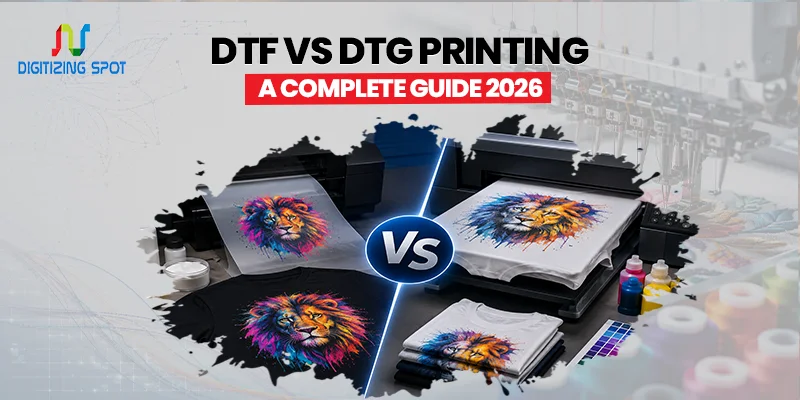
DTF vs DTG Printing: A Complete Guide 2026
Printing technology has changed a lot over the past few years. Businesses, clothing brands, and hobbyists can now create high-quality custom apparel like never before. Two of the most popular methods are DTF (Direct to Film) and DTG (Direct to Garment) printing. Both can create vibrant and detailed designs, but they do so in different ways.
To start a clothing brand, print custom T-shirts, or grow your printing business in 2026, choosing the right method is crucial. The wrong choice can increase costs, slow production, and affect print quality. Making the right choice can save time, improve customer satisfaction, and help your business grow. This guide outlines the main differences between DTF and DTG printing. It looks at their strengths and weaknesses. Then, it helps you pick the best option for your needs.
What Is DTF Printing?
DTF stands for Direct to Film printing. Instead of printing directly onto fabric, the design is first printed onto a special transfer film. A powder adhesive is then applied before the film is cured with heat. Finally, the design is transferred onto the garment using a heat press. This method works well on many types of fabric. That’s why it’s one of the fastest-growing printing options in custom apparel.
DTF offers bright colours and long-lasting results. You can print on cotton, polyester, fleece, canvas, or fabric blends. For businesses that need quick production and flexibility, DTF printing is an excellent choice.
What Is DTG Printing?
DTG stands for Direct to Garment printing. The printer uses water-based ink to print directly on fabric, just like a paper printer. The ink soaks into the fibres, creating soft and smooth prints with excellent detail.
DTG is great for photos, detailed artwork, and small custom clothing orders. Since there is no transfer film involved, the finished print feels natural on cotton garments.
Order Your Custom Patch Now!
DTF vs DTG Printing at a Glance
Feature | DTF Printing | DTG Printing |
Printing Method | Film transfer with heat press | Directly onto fabric |
Best Fabric Types | Cotton, polyester, blends, nylon and more | Mainly 100% cotton |
Colour Brightness | Bright and bold | Natural and soft |
Print Feel | Slightly raised | Soft and smooth |
Durability | Excellent | Very good with proper care |
Setup Time | Fast | Longer garment preparation |
Small Orders | Great | Excellent |
Bulk Orders | Very efficient | Less suitable |
White Ink Usage | Excellent | Excellent on cotton |
Equipment Cost | Lower overall investment | Higher printer cost |
How Does DTF Printing Work?
The DTF process is simple but highly effective. First, the artwork is printed onto PET transfer film using specialised DTF inks. Next, hot melt adhesive powder is applied to the printed design. The film is then cured before being placed onto the garment with a heat press.
After cooling, the film is peeled away, leaving a bright and long-lasting design. This process allows one transfer to be stored and applied later, making production much easier during busy periods. Looking for vibrant prints? Our DTF transfer service delivers durable transfers with brilliant colours and fine detail.
How Does DTG Printing Work?
DTG printing begins with preparing the garment. Most dark garments need a pre-treatment solution before printing. This helps the white ink bond properly with the fabric.
Once prepared, the garment is loaded into the printer, and the design is printed directly onto the fabric. The printed shirt is then cured using heat to set the ink. The result is a soft print. It has smooth colour transitions, making it great for detailed artwork and photographs.
Print Quality Comparison
Both methods produce impressive results, but they shine in different areas. DTF printing creates rich colours with sharp edges. Logos, bold graphics, sportswear, and promotional clothing all look excellent using this process. The colours remain bright even after repeated washing.
DTG printing offers a softer appearance because the ink becomes part of the fabric. It’s perfect for artwork with gradients, portraits, and detailed illustrations where every detail counts. If your designs use bold colours and simple graphics, DTF usually gives a better finish. If your artwork includes photographs or artistic shading, DTG may be the better option.
Fabric Compatibility
One of the biggest differences between these printing methods is the range of fabrics they support. DTF printing works great on:
- Cotton
- Polyester
- Cotton blends
- Canvas
- Denim
- Fleece
- Nylon
It also works on many other materials. This makes it suitable for businesses that print on different types of garments. DTG printing performs best on high-quality cotton garments. While some blended fabrics can be printed, the results are usually strongest on 100% cotton clothing. Businesses offering a wide product range often prefer DTF because it provides more flexibility.
Durability and Wash Performance
Customers expect printed garments to last. Both DTF and DTG provide excellent durability when proper materials and equipment are used. DTF prints are known for strong wash resistance. The colours stay bright, and the design remains firmly attached even after many washes.
DTG prints also last well, but following the correct washing instructions is important. Washing garments inside out with cold water helps keep the print looking fresh. Both methods can produce professional-quality products when handled correctly. Want crisp, scalable artwork? Choose our Vector Conversion Service for high-quality files ready for print and branding.
Speed and Production
Production speed matters for growing businesses. DTF printing allows transfers to be printed in advance and applied whenever needed. This reduces waiting time and helps complete large orders more efficiently. Need clean and accurate embroidery files? Consider our Custom Digitizing Service for sharp, machine-ready designs with fast turnaround.
DTG requires each garment to be prepared before printing. While this works well for one-off custom orders, it can slow production during busy periods. For businesses with bulk orders, DTF often provides smoother workflows and quicker turnaround times.
Cost Comparison
The overall cost depends on your production goals. DTF printers are generally more affordable to set up, and the printing process works across many different garments. This makes it an affordable option for small businesses and growing brands.
DTG equipment often requires a larger investment. Pre-treatment equipment, maintenance, and garment preparation also add to operating costs. If you plan to produce a high volume of different garments, DTF can offer better long-term value.
Which Printing Method Is Better for Small Businesses?
Many new clothing brands choose DTF because it provides excellent flexibility. They can print transfers ahead of time, accept different garment types, and complete customer orders quickly.
DTG is a fantastic choice for businesses that focus on high-quality cotton T-shirts. These shirts often feature artistic or photographic designs. Your decision should focus on your customers, product range, and production goals, not just on trends.
When Should You Choose DTF Printing?
DTF is a strong option if you regularly print on different fabrics, need bright colours, or handle large customer orders. It’s perfect for businesses selling workwear, sportswear, promotional clothing, hoodies, tote bags, and fashion apparel. The ability to store transfers before application also helps improve production planning.
Need Help To Create Custom Patch Right Now!
When Should You Choose DTG Printing?
DTG is well suited for businesses producing premium cotton T-shirts with detailed artwork. Artists, photographers, and online print-on-demand stores often pick DTG. They like its soft print feel and great image quality. If your designs focus on realism and fine details, DTG remains a reliable option.
Which Printing Method Will Lead in 2026?
The printing industry continues to grow, and both technologies have an important place. DTF is getting more popular. It works on various fabrics, lasts long, and speeds up production. It gives businesses more flexibility while keeping production costs manageable.
DTG is a top pick for premium cotton clothes. It’s perfect when soft prints and fine details are important. Rather than replacing each other, both technologies meet different customer needs. Choosing the right one depends on your products, budget, and business goals.
Conclusion
There is no single winner in the DTF vs DTG debate. Both printing methods deliver professional-quality results when used correctly. DTF is a great option for flexibility, quick results, bright colours, and fabric compatibility. If your business sells premium cotton clothes with detailed artwork and soft prints, DTG is a great choice.
At Digitizing Spot, we help businesses create top-notch print-ready artwork. Our work shines with both DTF and DTG printing. You can rely on our expert team for artwork correction, vector conversion, or custom DTF transfers. We provide reliable quality and quick turnaround times. Get your free quote today and bring your next printing project to life.
Get A Custom Quote
Frequently Asked Questions
DTF works best for various fabric types and bulk orders. DTG is perfect for high-quality cotton clothes with intricate designs.
DTF prints are more durable. They resist washing better and keep colours vibrant for longer.
Yes. DTF printing works well on polyester, cotton, blends, nylon, canvas, and many other fabrics.
DTG gives the best results on 100% cotton garments. Some blends can be printed, too.
DTF is often cheaper for businesses that print on different fabrics or handle big orders.
DTF prints designs on transfer film first. Then, it uses heat to press them onto fabric. In contrast, DTG prints ink directly onto the garment.
DTF printing typically creates brighter and more vibrant colours, especially on dark fabrics.
Yes. DTF is a smart pick for small businesses. It provides flexibility, fast production, and works well on various garments.
Yes. DTG printing is excellent for photographs, gradients, and highly detailed artwork with a soft finish.
Choose DTF for its versatility, durability, and quick production. DTG is ideal for premium cotton apparel featuring detailed, full-colour designs.
