
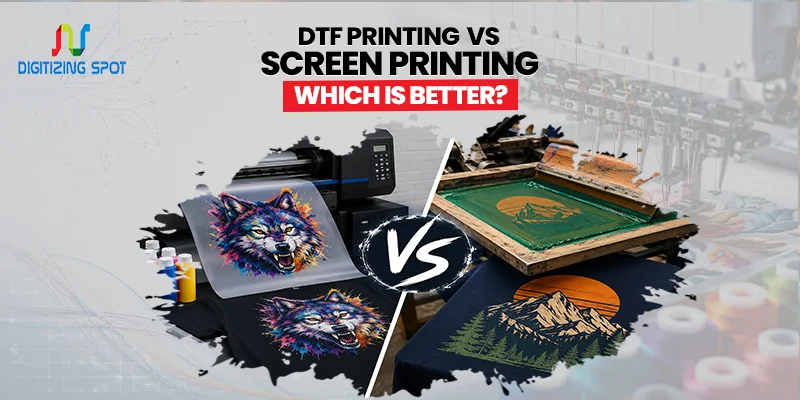
DTF Printing vs Screen Printing: Which Is Better?
Choosing the right printing method can make a big difference in how your custom apparel looks, feels, and lasts. Many businesses, clothing brands, schools, and event organizers often ask: Is DTF printing better than screen printing? Both methods can produce great-looking designs, but they are made for different needs.
The best choice depends on your artwork, order size, fabric type, and budget. A method that works perfectly for one project may not be the best option for another. In this guide, you’ll discover how DTF printing and screen printing differ. You’ll see where each method shines and how to pick the best one for your next order.
What Is DTF Printing?
DTF stands for Direct-to-Film printing. Instead of printing directly onto fabric, the design is first printed on a special transfer film using DTF inks. An adhesive powder is then added and cured with heat. The finished transfer is pressed onto the garment using a heat press. If you need vibrant, durable, and ready-to-press transfers for any fabric, consider our Custom DTF Transfer service.
This process allows detailed artwork to be printed on many types of fabric. Cotton, polyester, blends, canvas, fleece, and even some performance materials work well with DTF transfers. DTF is popular with businesses because transfers can be printed in advance. This allows for quick production and flexibility when needed.
What Is Screen Printing?
Screen printing is one of the oldest and most trusted garment printing methods. It uses mesh screens to push ink onto fabric. Each color in the design requires its own screen, making setup more involved than DTF printing.
Once the screens are prepared, production moves quickly. This makes screen printing an excellent choice for large orders with simple artwork. For decades, schools, sports teams, companies, and clothing brands have relied on screen printing because of its consistency and long-lasting prints.
Order Your Custom Patch Now!
How Do They Work?
Although both methods decorate garments, the printing process is very different. DTF printing creates a transfer first and applies it with heat. This means the same transfer can be stored and used later on different garments.
Screen printing places ink directly onto the fabric through prepared screens. The ink becomes part of the garment after curing, creating a smooth and durable finish. The different production methods affect cost, detail, turnaround time, and print feel.
Print Quality
Both methods produce high-quality prints, but they shine in different situations. DTF printing is known for sharp details and bright colors. It handles photographs, gradients, shadows, and small text very well. Since there are no screen limitations, even complex artwork prints cleanly.
Screen printing also produces vibrant colors, especially when using spot colors. Large logos, bold graphics, and simple artwork often have a rich and professional appearance. If your design includes many colors or fine details, DTF usually provides the cleaner result.
Fabric Compatibility
One of the biggest strengths of DTF printing is its ability to work on many fabrics. It performs well on cotton, polyester, tri-blends, fleece, canvas bags, hoodies, workwear, and athletic apparel. Businesses that print on different garment types often choose DTF because they do not need separate printing methods.
Screen printing also works on many fabrics, but certain materials may require special inks or additional preparation. If you regularly print on mixed fabric types, DTF offers more flexibility.
Durability
Customers often ask which method lasts longer. When produced correctly, both DTF and screen printing are highly durable. Screen printing has built its reputation on long-lasting performance. The ink bonds well with the garment and stands up to repeated washing. If your logo or artwork needs to be sharp and scalable for printing, consider our custom vector art service.
Modern DTF transfers have also improved significantly. High-quality films, inks, and adhesive powders make prints that resist cracking, peeling, and fading. This holds true when garments are washed as directed. In real-world use, both methods can provide excellent durability when quality materials are used.
Feel on the Garment
The feel of the print is another important difference. Screen printing usually feels softer, especially when thin layers of ink are used. The ink blends naturally into the fabric, creating a comfortable finish.
DTF transfers have a slightly different texture because the design sits on top of the garment. However, today’s premium DTF films are much softer and more flexible than earlier versions. For most customers, the difference is small, especially after several washes.
Cost Comparison
The right choice often depends on order size. DTF printing has very little setup cost. Because no screens are required, it is affordable for small orders, one-off shirts, samples, and custom designs.
Screen printing requires screen preparation before printing begins. This setup adds to the initial cost but becomes more affordable as order quantities increase. For smaller orders, DTF usually provides better value. For larger production runs, screen printing often offers a lower cost per shirt.
Order Size
This is one of the biggest deciding factors. If you need only a few shirts, DTF printing is usually the better option. There are no expensive setup fees, and every shirt can even have a different design.
Screen printing becomes more economical as the quantity increases. Once the screens are ready, hundreds or even thousands of garments can be printed efficiently. Businesses ordering uniforms, promotional shirts, or event apparel often choose screen printing for this reason.
Turnaround Time
Fast delivery matters to many customers. DTF printing generally offers quicker turnaround because there is little setup involved. Once the artwork is approved, transfers can be printed almost immediately.
Screen printing takes additional time to prepare screens, mix inks, and complete setup before production begins. For rush orders or last-minute projects, DTF is often the faster solution. If you want clean, production-ready embroidery files with smooth stitching, consider our embroidery digitizing service.
Which Method Is Better for Small Businesses?
Many small businesses prefer DTF printing because it offers flexibility without requiring large minimum orders. New clothing brands can test different designs without investing in expensive screen setups.
Custom gift shops can produce one shirt at a time. Online sellers can print only what customers order instead of keeping large inventories. This makes DTF an excellent option for businesses that want to reduce waste and control costs.
Which Method Is Better for Large Orders?
Screen printing remains one of the best choices for high-volume production. Schools, sports leagues, construction firms, charities, and corporate events often need many matching outfits.
Once production begins, screen printing delivers consistent quality and competitive pricing for bulk orders. For simple logos with only a few colors, it remains one of the most efficient printing methods available.
Need Help To Create Custom Patch Right Now!
Which Printing Method Should You Choose?
There is no single answer because every project is different. If your design has lots of colors, photos, gradients, or small details, DTF printing is often the best option. It also works well for small orders, fast turnaround, and printing on different fabric types.
If you need many shirts with simple designs and want the lowest cost per shirt, screen printing is usually the best choice. The right printing method depends on your goals, artwork, quantity, and budget.
Why Choosing the Right Print Partner Matters
Even the best printing method can produce poor results if the process is not handled correctly. High-quality inks, professional equipment, proper curing temperatures, and experienced production teams all play an important role in the final product.
Working with a skilled printing company ensures clean prints and accurate colors. You also get reliable turnaround times and garments that customers love to wear. A trusted print partner will also recommend the best method for your project instead of pushing one solution for every order.
Conclusion
Both DTF printing and screen printing offer excellent results when used for the right application. DTF stands out for detailed artwork, quick turnaround, and small orders. Screen printing is an excellent option for large orders, simple designs, and long production runs.
Instead of asking which method is better overall, ask which one is better for your specific project. That simple question often leads to better quality, lower costs, and happier customers.
At Digitizing Spot, we offer top-notch DTF transfers and professional printing. We ensure quick turnaround times and reliable service. Whether you need one custom design or a large production order, our team is ready to help. Contact us today for a free quote and let us recommend the best printing option for your project.
Get A Custom Quote
Frequently Asked Questions
DTF is better for small orders, detailed designs, and quick turnaround, while screen printing is better for large bulk orders.
Both methods are highly durable when quality materials and proper printing techniques are used.
Yes. DTF printing works very well on cotton, polyester, blends, fleece, and many other fabrics.
Although setup costs are higher, the cost per shirt drops significantly as order quantities increase.
Yes. DTF printing produces bright full-color graphics, gradients, photographs, and detailed artwork with excellent clarity.
DTF printing is generally faster because it requires little setup before production begins.
Yes, but very detailed or multi-color artwork is often easier and more accurate with DTF printing.
Yes. Many clothing brands choose DTF for small production runs, product testing, and custom apparel.
Properly printed screen prints are very durable and resist cracking with normal care.
Digitizing Spot offers premium-quality DTF transfers, fast turnaround, competitive pricing, and free quotes for every project.
