
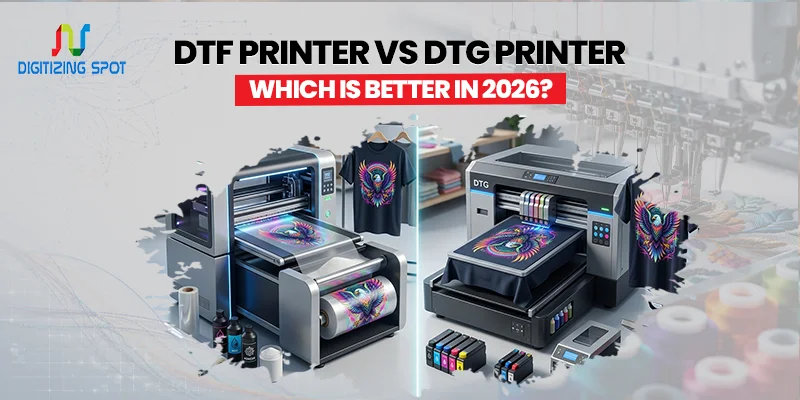
DTF Printer vs DTG Printer: Which Is Better in 2026?
Buying the wrong printer can cost you time, money, and customers. Many print shop owners and clothing brands find it hard to choose between a DTF printer and a DTG printer. While both produce great-looking apparel, they work in very different ways.
The good news is that the right choice becomes much easier once you know how each printer works. This guide compares DTF and DTG printers in 2026. It covers print quality, fabric options, costs, speed, and maintenance. By the end, you’ll know which printer fits your business and your goals.
What Is a DTF Printer?
A DTF (Direct-to-Film) printer prints a design onto a special transfer film. The printed film has adhesive powder on it. It gets cured with heat. Then, a heat press applies it to the fabric. One of the biggest reasons businesses choose DTF printing is its flexibility. It works well on cotton, polyester, blends, canvas, denim, and many other fabrics.
This makes it a great option for print shops that handle different customer orders every day. DTF printing is known for its bright colors, strong durability, and ability to print detailed artwork without pre-treating the fabric. If you need clean embroidery files that run smoothly on your machine, consider our custom embroidery digitizing service.
Order Your Custom Patch Now!
What Is a DTG Printer?
A DTG (Direct-to-Garment) printer prints the design directly onto the fabric. It works much like an inkjet printer but is made for clothing. DTG printing performs best on 100% cotton garments.
Before printing on dark-colored shirts, the fabric usually needs pretreatment. This helps the ink bond properly and improves color quality. Many businesses choose DTG for premium cotton apparel because the print feels soft and becomes part of the fabric.
DTF Printer vs DTG Printer: Key Differences
Feature
DTF Printer
DTG Printer
Print Quality Comparison
Fabric Compatibility
Fabric choice is one of the biggest differences between DTF and DTG. DTG printing performs best on cotton garments. Printing on polyester or blended fabrics often gives less consistent results. This wider fabric compatibility makes DTF a better choice for businesses offering many apparel products. DTF printing works on almost every common fabric, including:
- Cotton
- Polyester
- Cotton blends
- Canvas
- Denim
- Nylon (with proper settings)
Durability and Wash Resistance
Customers want prints that last. DTF transfers are known for excellent wash durability when applied correctly. They resist cracking, fading, and peeling after many washes. DTG prints also last well, especially when proper pretreatment and curing are used.
If you want ready-to-press designs for any fabric, consider our custom DTF transfer service. However, poor maintenance or incorrect settings can reduce durability. Both methods can produce long-lasting prints, but DTF often performs better across different fabric types.
Production Speed
Production speed matters when handling customer orders. DTF printing allows businesses to print transfer sheets ahead of time. The transfers can be stored until needed, making large production runs much easier.
DTG printing prints each shirt one at a time. For every dark garment, pretreatment adds another production step. If your business handles bulk orders, DTF often saves valuable production time.
Cost Comparison
The total cost includes equipment, supplies, labor, and maintenance.
DTF Costs
A DTF setup usually includes:
- DTF printer
- Transfer film
- DTF ink
- Adhesive powder
- Heat press
Although there are several supplies, many businesses find the production cost lower because DTF works on many fabric types without pretreatment.
DTG Costs
A DTG setup usually includes:
- DTG printer
- Pretreatment machine
- DTG ink
- Cleaning supplies
Daily maintenance can also increase operating costs over time. For businesses looking to print different products with fewer limitations, DTF often provides better long-term value.
Want to Know More About the Cost of a DTF Printer & DTG Printer? Click Here
Maintenance Requirements
Printer maintenance affects both production time and operating costs. DTF printers require regular nozzle checks and cleaning, but many newer models are easier to maintain than older systems.
DTG printers usually require daily maintenance to prevent ink from drying inside the print heads. Skipping maintenance may lead to clogged nozzles and expensive repairs. Businesses that print every day may not mind the routine, but occasional users often find DTF easier to manage.
Best Business Uses for DTF Printing
DTF printing works well for businesses that produce different types of custom products. It is a great choice for:
- Print-on-demand businesses
- Small apparel brands
- Sports uniforms
- Workwear
- Promotional clothing
- Fashion brands
- Bulk custom orders
Best Business Uses for DTG Printing
DTG remains a good option for businesses focused mainly on cotton apparel. It works well for:
- Premium cotton t-shirts
- Fashion brands
- Photo-quality artwork
- Small custom shirt orders
- Online apparel stores
Need Help To Create Custom Patch Right Now!
Which Printer Is Better for Beginners?
Many beginners choose DTF because it offers more flexibility. Since DTF does not require pretreatment for most jobs and works on many fabrics, new businesses can accept a wider variety of customer orders without buying different equipment.
DTG has a learning curve due to pretreatment, maintenance, and fabric limitations. For someone starting a custom apparel business in 2026, DTF is often the easier option.
DTF Printer Pros
DTF Printer Cons
DTG Printer Pros
DTG Printer Cons
Great for cotton apparel
Which Printer Should You Choose in 2026?
The right printer depends on your business goals.
Choose a DTF printer if you:
- Print on different fabric types
- Handle bulk orders
- Want lower production limits
- Need bright, durable prints
- Want more product options
Choose a DTG printer if you:
- Focus mainly on cotton apparel
- Sell premium fashion shirts
- Print photo-quality artwork
- Handle smaller custom orders
For many growing print businesses in 2026, DTF offers more flexibility and a better return on investment because it supports more materials and a wider range of products.
Conclusion
There is no single printer that fits every business. Both DTF and DTG produce professional results when used correctly. If your goal is flexibility, faster production, and printing on many fabric types, DTF is often the better choice. If your focus is premium cotton apparel with a soft print feel, DTG remains a strong option.
No matter which printing method you choose, high-quality artwork is just as important as the printer itself. Clean, print-ready designs help you produce sharp results, reduce production issues, and keep customers happy. At Digitizing Spot, we provide professional artwork services with fast turnaround, reliable quality, and free quotes to help your printing business succeed.
Get A Custom Quote
Frequently Asked Questions
A: DTF is better for fabric variety, while DTG is best for cotton garments.
A: DTF is often the better choice because it offers more flexibility.
A: Yes. Properly applied DTF prints can last through many washes.
A: Yes, but pretreatment is usually required.
DTF is generally faster because transfers can be prepared in advance.
Yes. DTF continues to grow because it supports many fabrics and offers excellent print quality.
