
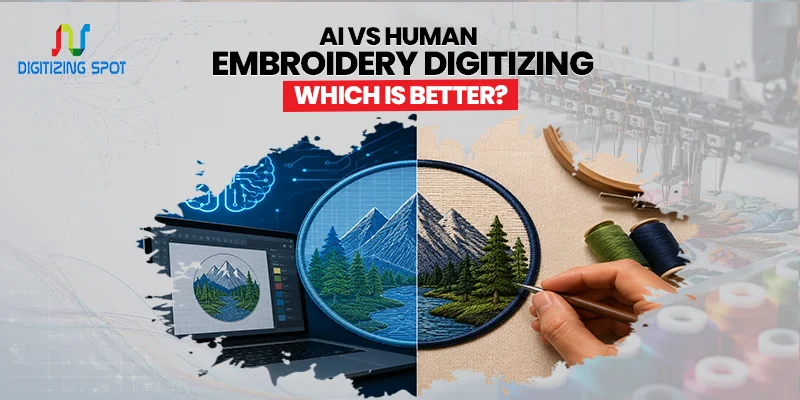
AI vs Human Embroidery Digitizing: Which Is Better?
Artificial intelligence is changing almost every industry, and embroidery digitizing is no exception. Many businesses now wonder if AI can replace a skilled digitizer or if human expertise still makes the biggest difference. While AI can save time, embroidery is more than turning an image into stitches. Every fabric, thread type, and machine needs careful planning to produce clean, professional results.
If you want embroidery that looks sharp, runs smoothly, and avoids costly mistakes, it helps to know the difference between AI and human digitizing. This guide explains how both methods work, their pros and cons, and why experienced digitizers still play a major role in producing high-quality embroidery.
What Is AI Embroidery Digitizing?
AI embroidery digitizing uses software that automatically analyzes artwork and creates an embroidery file. The software detects shapes, colors, and outlines before assigning stitch types with little or no human input. The main goal is speed. Instead of spending time manually setting every stitch, AI produces a design within minutes.
Many businesses use AI for simple logos or basic artwork because it reduces production time. However, the results often depend on the quality of the artwork and the complexity of the design. If you need print-ready artwork, consider our AI Color Separation service for accurate color layers and smooth printing results.
What Is Human Embroidery Digitizing?
Human embroidery digitizing is completed by an experienced digitizer who manually creates the embroidery file. Instead of relying only on software, the digitizer studies the artwork and plans every part of the design. An experienced digitizer considers the following:
- Fabric type
- Stitch direction
- Underlay
- Stitch density
- Pull compensation
- Thread trims
- Machine efficiency
These adjustments help the design stitch cleanly and reduce production problems. Every logo is different, and every fabric behaves differently. Human experience allows these factors to be adjusted before production begins.
Order Your Custom Patch Now!
AI vs Human Embroidery Digitizing: Key Differences
Although both methods create embroidery files, the final results can be very different.
Speed
AI clearly wins when it comes to speed. Simple artwork can often be converted within minutes. Human digitizing takes longer because every section is planned manually. Depending on the design, this may take anywhere from several minutes to a few hours. If your project has a tight deadline and the artwork is simple, AI may be enough.
Accuracy
Human digitizers usually produce more accurate embroidery files. AI software follows automated rules, but it cannot always recognize small design details, fabric behavior, or the best stitch path. Experienced digitizers adjust every part of the design to improve the final embroidery.
Quality
Quality is where human digitizing stands out. Professional digitizers know how to prevent common embroidery problems such as:
- Thread breaks
- Fabric puckering
- Gaps between stitches
- Distorted lettering
- Poor stitch flow
Complex Designs
AI performs reasonably well with basic artwork that has large shapes and simple text. Human digitizing produces much better results. These details require decisions that software still struggles to make correctly. When logos contain:
- Small lettering
- Fine details
- Gradients
- Thin outlines
- Layered elements
Fabric Adjustments
Different fabrics require different digitizing settings. For example: A polo shirt stretches differently than a baseball cap. A fleece jacket behaves differently than a leather patch. An experienced digitizer changes stitch settings for each material. Most AI software uses standard settings that may not work well on every fabric.
Advantages of AI Embroidery Digitizing
AI digitizing offers several benefits. First, it saves time. Businesses needing fast previews or basic embroidery files can receive results quickly. Second, it lowers costs because less manual work is required. Third, AI works well for simple graphics with large shapes and limited detail. For companies handling many basic designs every day, AI can improve workflow.
Limitations of AI Embroidery Digitizing
Despite its speed, AI still has several limitations. It cannot fully understand how fabric stretches during embroidery. It may create unnecessary trims or inefficient stitch paths. Small lettering often becomes difficult to read. Complex logos may lose important details. Most importantly, AI cannot judge embroidery the way an experienced digitizer can. This is why many AI-generated files still need manual editing before production. If you want a blurry or low-quality image turned into a fully scalable vector, consider our JPEG to AI Conversion service.
Advantages of Human Embroidery Digitizing
Human digitizing continues to be the preferred choice for businesses that want premium embroidery. Experienced digitizers carefully plan every stitch instead of relying on automatic settings. The result is cleaner embroidery with fewer machine stops and better durability. Other advantages include better stitch flow, cleaner lettering, less thread waste, improved machine performance, better results on different fabrics, and high customer satisfaction. A well-digitized file often saves money because production runs more smoothly.
When Should You Choose AI Digitizing?
AI digitizing can be a practical option when:
- Your design is very simple.
- You need a quick sample.
- The embroidery is not highly detailed.
- Budget is your main concern.
- Minor imperfections are acceptable.
When Should You Choose Human Digitizing?
Human digitizing is the better choice when quality matters. It is ideal for Business logos, Corporate uniforms, Sports team apparel, Custom patches, Hats and caps, Jackets, Small lettering, Detailed artwork & Luxury branding.
Need Help To Create Custom Patch Right Now!
Can AI Replace Human Digitizers?
Not completely. AI continues to improve every year, but embroidery involves more than software calculations. Professional digitizers understand how thread behaves, how fabrics react, and how embroidery machines perform during production.
These real-world decisions come from experience, not automation. Many embroidery companies already combine both methods. AI creates an initial file, while a skilled digitizer reviews, edits, and improves it before production. This approach saves time without sacrificing quality.
Which Option Gives Better Value?
Many people focus only on the digitizing price. However, a cheaper file can become expensive if it causes production problems. Poor digitizing may lead to:
- Machine downtime
- Extra thread usage
- Damaged garments
- Customer complaints
- Repeated production
A professionally digitized file often costs slightly more but delivers better embroidery and fewer mistakes. In the long run, quality usually saves money. If your design requires precise color channels for screen printing, consider our Photoshop Separation service for accurate and production-ready files.
Choose Quality Over Automation
AI has made embroidery digitizing faster and more accessible. It works well for basic designs and quick turnaround projects. But when it comes to stitch quality, clear details, and dependable production count, human digitizing still provides the best results.
If your logo represents your business, every stitch counts. A professionally digitized file makes your embroidery machines run smoothly. It also helps produce clean, durable, and attractive results.
At Digitizing Spot, skilled digitizers check each design. They ensure quality, accuracy, and a quick turnaround. You can rely on us for a simple logo or a detailed embroidery file. We offer dependable service, fair pricing, and steady results. Request your free quote today and let us help bring your artwork to life with professional embroidery digitizing.
Get A Custom Quote
Frequently Asked Questions
AI is accurate for simple designs, but detailed logos often need manual adjustments for the best embroidery results.
Yes. Human digitizers can adjust stitches, density, and fabric settings to create cleaner and more reliable embroidery.
In many cases, yes. However, lower-cost files may require editing or lead to production issues that increase overall costs.
AI often struggles with very small lettering. Human digitizers usually produce clearer and more readable results.
Human embroidery digitizing is the better choice because it provides higher quality, better stitch flow, and a more professional finish.
Most standard logo digitizing jobs are completed within a few hours to 24 hours, depending on the design.
Not entirely. AI helps speed up the process, but experienced digitizers are still needed for quality control and complex designs.
Different fabrics stretch and react differently during embroidery, so stitch settings must be adjusted for the best results.
Yes. A well-digitized file can reduce thread breaks, trims, puckering, and machine downtime.
Digitizing Spot offers professional embroidery digitizing with fast turnaround, quality-focused work, and a free quote before you order.
