
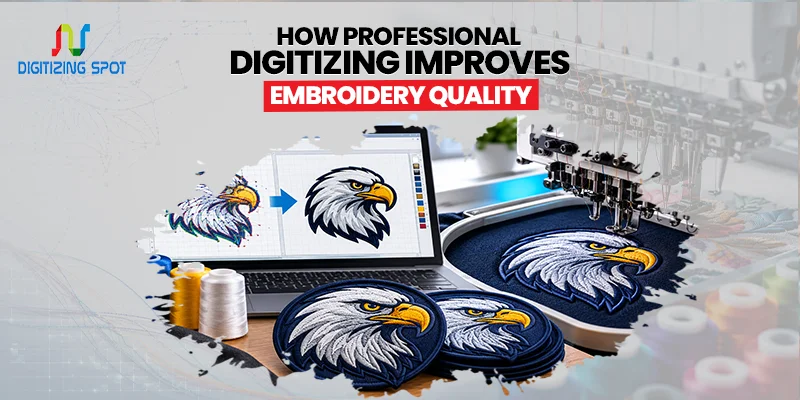
How Professional Digitizing Improves Embroidery Quality
A great embroidery design starts long before the needle begins moving. You can have a high-quality logo or artwork, but it may not look good when stitched. The reason is often poor digitizing. Professional digitizing turns artwork into a stitch file that an embroidery machine can read.
It decides where stitches go, how they are placed, and how the design should be stitched on fabric. When this process is done correctly, the final embroidery looks cleaner, sharper, and more professional.
Why Does Professional Digitizing Matter?
Every embroidery design needs the right stitch plan. A poor stitch plan can cause gaps, bulky areas, loose threads, or unclear details. Professional digitizing helps control these issues before production begins.
The goal is to make the design stitch smoothly while keeping its original shape and details as much as possible. This is especially important for business logos, uniforms, hats, jackets, patches, and promotional products.
Better Stitch Placement Creates Cleaner Results
Stitch placement has a direct effect on embroidery quality. Professional digitizing places stitches carefully so different parts of the design connect properly. This helps prevent gaps and uneven areas.
For example, a logo with small letters needs careful stitch planning. If the stitches are too dense or poorly placed, the letters may become difficult to read. Proper placement keeps the design clear and balanced.
Order Your Custom Patch Now!
Stitch Density Affects Embroidery Quality
Stitch density refers to how closely stitches are placed together. Too many stitches can make an area thick and heavy. It may also cause thread buildup or fabric distortion. If you want clean, stitch-ready embroidery files, consider our custom digitizing service.
Too few stitches can leave gaps and make the design look weak. Professional digitizing uses the right density for each part of the design. This helps create even coverage without adding unnecessary stitches.
The Right Stitch Type Improves Detail
Different parts of an embroidery design may need different stitch types. Satin stitches work well for borders, lettering, and narrow shapes. Fill stitches can cover larger areas. Running stitches can create fine lines and small details.
A professional digitizer chooses stitch types based on the shape and size of each design element. This helps the final embroidery look cleaner and more defined.
Stitch Direction Makes Designs Look Better
Stitch direction can change how light reflects from embroidered areas. If all stitches run in the same direction, a design may look flat. Changing stitch direction in suitable areas can help create better texture and visual separation.
Professional digitizing uses stitch direction to follow the shape of the artwork. This is important for logos, lettering, symbols, and designs with multiple sections.
Proper Underlay Gives Embroidery More Support
Underlay stitches are placed below the main stitches. They help support the design and provide a stable base. Without the right underlay, embroidery can look uneven or lose its shape. If you want sharp, scalable artwork for printing and branding, consider our vector conversion service.
The amount and type of underlay depend on factors such as the fabric, design, and stitch type. Professional digitizing includes underlay where needed to support clean stitching.
Good Digitizing Protects Small Details
Small details can be difficult to reproduce with embroidery. Very thin lines, tiny letters, and small shapes may lose their form when stitched.
Professional digitizing adjusts these elements so they work better with thread and fabric. Sometimes a small design detail needs to be simplified or resized. This helps keep the finished embroidery readable and clear.
Professional Digitizing Reduces Thread Problems
Poor digitizing can create unnecessary thread changes, jumps, trims, and long stitches. These problems can slow down production and affect the final appearance.
A well-planned stitch sequence helps the machine move through the design more efficiently. This can create smoother embroidery while reducing unnecessary machine movement.
Fabric Matters in Embroidery Digitizing
The same design may not work the same way on every fabric. A design stitched on a cap may need different settings from one stitched on a sweatshirt or polo shirt.
Soft fabrics, stretchy materials, denim, and caps each have different needs. Professional digitizing takes the material into account when planning stitches. This helps the design sit properly on the fabric.
Professional Digitizing Improves Lettering
Embroidery lettering needs special attention because small text can quickly become unclear. Font choice, letter size, spacing, stitch direction, and density all affect readability.
Professional digitizing adjusts lettering to suit embroidery rather than simply copying text from the original artwork. This is important for company names, uniforms, team apparel, and branded clothing.
Need Help To Create Custom Patch Right Now!
It Helps Logos Look More Professional
A business logo represents the brand. Poor embroidery can make even a good logo look messy. Uneven stitching, poor spacing, and unclear details can affect how customers see the finished product.
Professional digitizing helps preserve important parts of the logo while preparing it for embroidery. The result is a cleaner design that looks more suitable for professional clothing and promotional products.
Quality Digitizing Saves Time and Money
Fixing a poorly digitized design after production starts can waste both time and materials. The machine may need to stop, the design may need changes, and garments may need to be restitched.
A properly prepared file can reduce these problems. Professional digitizing gives embroiderers a better starting point and can make the production process smoother. If you want vibrant, durable designs for custom apparel, consider our DTF transfers service.
Why Choose Professional Embroidery Digitizing?
Professional digitizing is about more than converting artwork into stitches. It requires knowledge of embroidery machines, fabrics, thread, stitch types, and design structure.
At Digitizing Spot, we prepare embroidery files with attention to stitch placement, density, direction, underlay, and design details. Whether you need a business logo, cap design, uniform artwork, or custom embroidery file, our team can prepare your design for clean stitching.
We focus on quality, fast turnaround, and reliable service so you can move ahead with your embroidery project without unnecessary delays. Need a professional embroidery file? Contact Digitizing Spot today and get a free quote.
Get A Custom Quote
Frequently Asked Questions
It is the process of preparing artwork as a machine-readable embroidery file with the right stitch settings.
It controls stitch placement, density, direction, and sequence to create cleaner embroidery.
The right density provides good coverage without making the embroidery too thick or uneven.
Underlay is a base layer of stitches that supports the main embroidery stitches.
Yes. Professional digitizing can adjust small details so they remain clearer when stitched.
Yes. Different fabrics require different stitch settings and design adjustments.
It helps preserve important logo details and creates a cleaner embroidered result.
Yes. Poor digitizing can cause gaps, thread buildup, uneven stitches, and unclear details.
Digitizing Spot can prepare embroidery files based on your artwork and the requirements of your embroidery machine.
Contact Digitizing Spot with your artwork and project details to get a free quote.
