
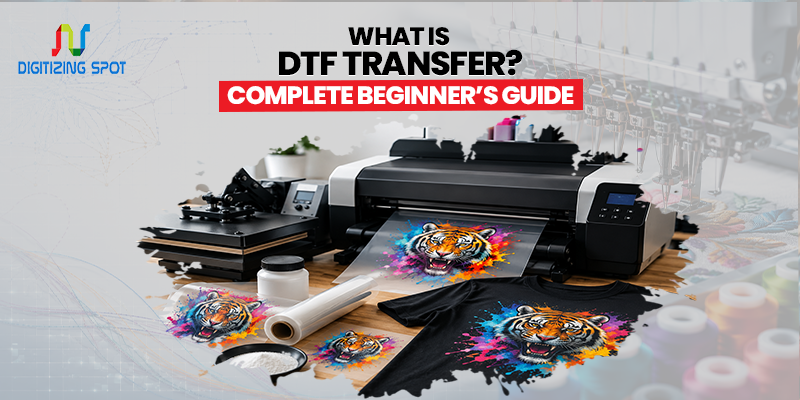
What Is DTF Transfer? A Complete Beginner’s Guide
Have you ever ordered a custom shirt only to see the design crack, fade, or peel after a few washes? Many people face this problem when using low-quality printing methods. Choosing the wrong print option can waste money, annoy customers, and create products that don’t last long.
This is where DTF transfers have changed the game. DTF stands for Direct-to-Film. It offers bright colors and strong durability. Plus, it works on many fabric types. It has become a top printing method for businesses, clothing brands, and hobbyists. We’ll cover how they work, their benefits, and why many prefer them for custom apparel printing in this guide.
What Is a DTF Transfer?
DTF transfer stands for Direct-to-Film transfer. It’s a printing method. First, a design goes on a special film. Then, heat and pressure transfer it onto fabric. DTF transfers let you prepare the design first and apply it later. If you need your logo or artwork converted into a clean, stitch-ready embroidery file, consider our custom embroidery digitizing service.
This is different from some printing methods that need direct printing on the garment. This makes the process flexible and efficient. DTF transfers can be used on cotton, polyester, blends, and many other fabrics. This versatility is one reason they have become so popular in the custom apparel industry.
Order Your Custom Patch Now!
How Does DTF Transfer Printing Work?
The DTF process is simple to understand, even for beginners. First, the design is printed onto a special transfer film using DTF inks. After the design is printed, a layer of adhesive powder is applied to the wet ink. Next, the adhesive powder is cured using heat. This creates a ready-to-use transfer.
Finally, the transfer is placed on the garment and pressed using a heat press. The design bonds to the fabric and creates a durable print. The result is a vibrant and long-lasting image that feels smooth and professional.
Benefits of DTF Transfers
Works on Many Fabric Types
One of the biggest advantages of DTF transfers is that they work on many materials. DTF transfers work well for many items. You can print on cotton shirts, polyester uniforms, hoodies, sweatshirts, tote bags, and blends. This flexibility allows businesses to offer more products without changing printing methods.
Bright and Detailed Prints
DTF printing produces strong colors and clean details. Complex artwork, small text, and colorful graphics can be reproduced accurately. This makes DTF an excellent choice for logos, promotional apparel, and fashion designs. Customers often appreciate the professional appearance and vibrant finish.
Strong Durability
Durability is important when creating custom apparel. DTF transfers are designed to withstand regular wear and washing. When applied correctly, the print stays intact and maintains its appearance for a long time. This helps businesses provide products that customers can trust.
No Need for Large Order Quantities
Some printing methods become cost-effective only when producing large volumes. DTF transfers are suitable for both small and large orders. Whether you need one shirt or hundreds, the process remains practical. This is especially helpful for startups, small businesses, and individuals testing new designs.
Faster Production
Since transfers can be prepared ahead of time, production becomes more efficient. Print shops can keep popular designs ready and apply them when orders arrive. This can reduce turnaround times and help businesses meet customer deadlines. If you want sharp, scalable artwork for printing, branding, or promotional products, consider our custom vectorizing service.
What Can DTF Transfers Be Used For?
DTF transfers are used across many industries because of their versatility. Custom apparel businesses apply these transfers to t-shirts, hoodies, and sweatshirts. Sports teams use them for uniforms. Companies also find them great for branded workwear and promotional items.
Schools, clubs, event organizers, and online clothing brands also rely on DTF transfers for custom designs. Because the process works on many fabrics, the possibilities are almost endless. If you need vibrant, full-color apparel prints with excellent durability and fast application, consider our custom DTF transfer service.
DTF Transfers vs Screen Printing
Many beginners wonder how DTF compares to screen printing. Screen printing is a well-known method that works very well for large orders with simple designs. However, setup can take time and may not be ideal for small runs.
DTF transfers require less setup and handle detailed, colorful artwork more easily. For businesses that receive different designs regularly, DTF often provides greater flexibility. Both methods have their strengths, but DTF is often preferred for short runs, custom orders, and detailed graphics.
DTF Transfers vs DTG Printing
DTG stands for “Direct-to-Garment” printing. DTG prints directly onto fabric, while DTF prints onto film before transferring the design to the garment. One key difference is fabric compatibility.
DTG generally performs best on cotton garments, while DTF works on cotton, polyester, and blends. DTF also allows transfers to be stored and used later, which adds convenience for many businesses. For those looking for versatility and broad fabric support, DTF is often a strong option.
Are DTF Transfers Good for Small Businesses?
Yes, DTF transfers are an excellent option for small businesses. New apparel brands often need a printing solution that does not require large inventory investments. DTF transfers make it possible to produce garments as orders come in.
This reduces waste and helps businesses manage costs more effectively. DTF lets startups and growing brands make professional-looking products without large production runs. This flexibility makes it a great choice.
How Long Do DTF Transfers Last?
The lifespan of a DTF transfer depends on a few factors: print quality, how it’s applied, and how you care for the garment. When produced and applied correctly, DTF transfers can last through many wash cycles while maintaining color and detail.
Following proper washing instructions helps maximize durability. Turn garments inside out and avoid excessive heat. This helps keep the print looking good for longer.
Need Help To Create Custom Patch Right Now!
Tips for Getting the Best DTF Results
Quality starts with the artwork. High-resolution designs typically produce better print results. Using quality films, inks, and adhesive powders also plays an important role in the final product.
Proper heat press settings are equally important. The right temperature, pressure, and pressing time help create a strong bond between the transfer and the fabric. Using an experienced DTF transfer provider helps achieve reliable and professional results.
Choosing a Reliable DTF Transfer Partner
Not all DTF transfers are created equal. A reliable provider uses quality materials, modern equipment, and strict quality control. This makes sure every transfer has bright colors, clear details, and reliable durability.
When picking a supplier, seek clear communication, quick turnaround times, and helpful customer service. A company that offers free quotes and expert advice can help you find the best solution for your project. This can also help you save money.
Conclusion
DTF transfers have become one of the most popular apparel printing methods for a reason. They offer bright colors, strong durability, excellent detail, and compatibility with many fabric types. DTF transfers are a smart and affordable option. They’re great if you’re starting a clothing brand, running a print shop, or making custom clothes for yourself.
At Digitizing Spot, we focus on providing top-notch DTF transfer solutions. We promise quick turnaround times and reliable service. Ready to bring your designs to life? Contact us today for a free quote. See how professional DTF transfers can make your next project shine.
Get A Custom Quote
Frequently Asked Questions
DTF stands for Direct-to-Film, a printing method that transfers designs from a special film onto fabric using heat.
High-quality DTF transfers can last for many washes when applied and cared for properly.
Yes, DTF transfers work very well on cotton, polyester, blends, and many other fabrics.
DTF transfers are often better for small orders, detailed designs, and full-color prints, while screen printing is ideal for large runs.
When produced and applied correctly, DTF transfers are highly durable and resist cracking or peeling.
Yes, you can apply DTF transfers at home using a heat press and the recommended settings.
Yes, DTF transfers are cost-effective for small businesses because they support low minimum order quantities.
DTF transfers can be used on t-shirts, hoodies, sweatshirts, tote bags, uniforms, and more.
No, quality DTF transfers have a soft feel while maintaining vibrant colors and durability.
Yes, DTF printing can reproduce detailed, full-color artwork with sharp lines and bright colors.
